

Introduction
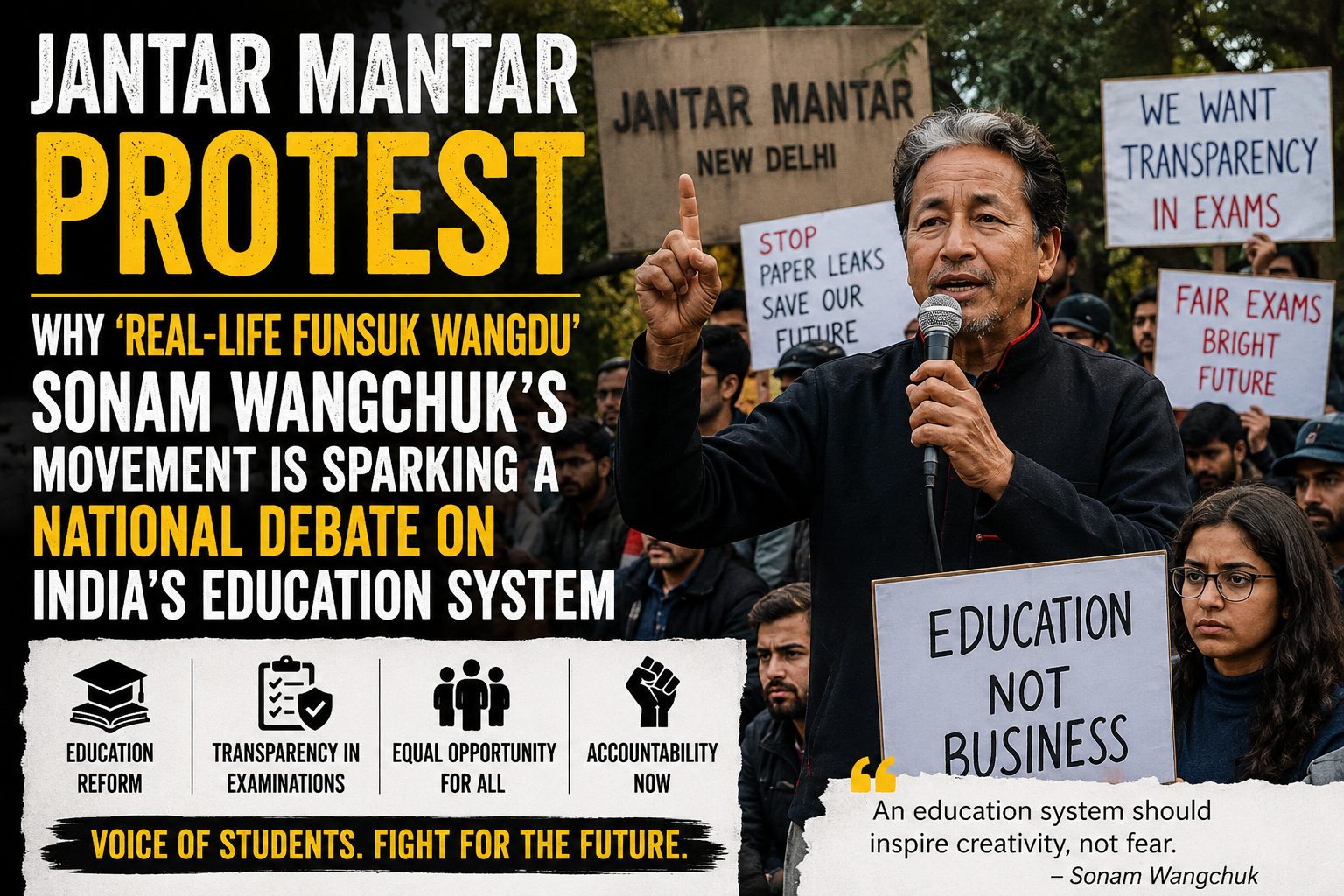
India’s education system is once again at the center of national discussion. Thousands of students, teachers, education activists, and young professionals have gathered at Jantar Mantar, New Delhi, demanding greater transparency, accountability, and reforms in examination and recruitment processes. At the heart of this movement stands Sonam Wangchuk, the renowned education reformer widely recognized as the real-life inspiration behind the iconic character Phunsukh (Funsuk) Wangdu from the Bollywood blockbuster 3 Idiots.His participation has transformed what began as a student-led movement into a nationwide conversation about the future of education in India. The protest has gained widespread public attention, with growing discussions across social media, educational institutions, and news platforms.
Who Is Sonam Wangchuk?
Sonam Wangchuk is an engineer, innovator, education reformer, and climate activist from Ladakh. For decades, he has advocated for an education system that emphasizes creativity, practical learning, innovation, and real-life problem-solving rather than rote memorization.Although millions know him as the inspiration behind Aamir Khan’s character Phunsukh Wangdu in 3 Idiots, Wangchuk has consistently focused on educational innovation through institutions like SECMOL and projects that promote experiential learning and sustainable development.
Why Is Jantar Mantar Becoming the Center of Attention?
Jantar Mantar has long served as India’s symbolic location for peaceful democratic protests. In recent weeks, it has become the focal point for demonstrations concerning examination integrity, recruitment transparency, and broader education reforms.Participants argue that recurring controversies surrounding competitive examinations have weakened public confidence. Students from different states have joined together to demand stronger safeguards, fair evaluation systems, and greater accountability from institutions responsible for conducting national examinations.
Why Did Sonam Wangchuk Join the Protest?
Sonam Wangchuk’s decision to participate has significantly increased national attention on the movement.According to recent reports, Wangchuk has undertaken a hunger strike to highlight concerns surrounding educational governance and examination credibility. His participation symbolizes support for students demanding systemic reforms and renewed trust in India’s education system.His message extends beyond individual examinations. Instead, he advocates building an education system that rewards innovation, integrity, critical thinking, and equal opportunity for every learner.
From Reel to Real: The Story Behind Funsuk Wangdu
Released in 2009, 3 Idiots challenged India’s traditional education model by questioning excessive academic pressure, rote memorization, and narrow definitions of success.The character Phunsukh Wangdu represented curiosity, creativity, and learning driven by understanding rather than grades.More than fifteen years later, many students believe the issues portrayed in the film continue to exist.
Current debates include:
Examination transparencyStudent mental healthPressure of competitive examsRecruitment delaysNeed for practical learningEqual educational opportunities
This parallel explains why many people are once again referring to Sonam Wangchuk as the “real-life Funsuk Wangdu.”
What Are Students Demanding?
Although different organizations have raised varying concerns, the movement broadly calls for:
Greater transparency in examination systemsStronger safeguards against paper leaks and irregularitiesFaster recruitment processesImproved accountability of examination authoritiesFair opportunities for deserving candidatesLong-term reforms in educational governance
Students argue that millions invest years preparing for competitive examinations, making trust in the system essential.
Growing Public Support
The protest has expanded beyond students.Teachers, education experts, civil society members, and public personalities have expressed support for reforms in India’s education system.Actor Omi Vaidya, remembered for playing Chatur in 3 Idiots, publicly appealed for support for Sonam Wangchuk, referring to him as the “real-life Funsukh Wangdu.” His statement further amplified public interest in the movement.
Social Media Amplifies the Movement
Platforms such as X, Instagram, YouTube, and Facebook have played a major role in spreading awareness.
Trending discussions include:
#SonamWangchuk#JantarMantar#EducationReform#StudentsProtest#SaveEducation
Many users are sharing videos, speeches, interviews, and personal experiences to highlight concerns about examination fairness and educational reforms.Social media has helped the movement reach audiences far beyond Delhi, encouraging nationwide discussion.
Why Education Reform Matters
India has one of the world’s largest student populations.Every year, millions compete in entrance examinations for engineering, medicine, government jobs, universities, and professional courses.Experts argue that an effective education system should not only test memory but also encourage:
InnovationCreativityPractical skillsCritical thinkingEthical leadershipScientific temperament
Sonam Wangchuk has consistently advocated these principles throughout his career. His participation in the protest has renewed conversations about balancing academic excellence with holistic education.
Challenges Facing India’s Education System
The current debate highlights several long-standing issues:
1. Examination Pressure
Students often spend years preparing for highly competitive examinations.
2. Mental Health
Academic stress remains a significant concern for many young people.
3. Skill-Based Learning
Industry experts increasingly emphasize practical knowledge alongside theoretical education.
4. Transparency
Trust in examination processes is critical for maintaining public confidence.
5. Equal Opportunity
Every deserving student should have access to fair evaluation and recruitment systems.These concerns form the broader context of the ongoing discussions surrounding educational reform.
What Happens Next?
The future of the movement depends on continued dialogue among students, policymakers, educational institutions, and civil society.Observers believe the current protests could influence future policy discussions regarding examination management, institutional accountability, and educational governance.Whether immediate policy changes occur or not, the movement has already succeeded in bringing education reform back into national focus.
Lessons Beyond the Protest
The events at Jantar Mantar remind us that education is more than examinations and degrees.
A modern education system should prepare students to:
Think independentlySolve real-world problemsInnovate responsiblyAdapt to changing technologiesBuild ethical leadership
These ideas have been central to Sonam Wangchuk’s work for decades.
Conclusion
The ongoing protest at Jantar Mantar represents more than a public demonstration—it reflects the aspirations of millions of students who seek a fair, transparent, and future-ready education system.Sonam Wangchuk’s involvement has added symbolic significance to the movement because he has long championed educational innovation and student-centered learning. His association with the beloved character Funsukh Wangdu has also helped bring renewed public attention to these issues.As India continues to evolve into a global knowledge economy, conversations about educational quality, transparency, and innovation will remain crucial. Regardless of differing viewpoints on specific demands, the ongoing debate underscores a shared objective: building an education system that inspires confidence, rewards merit, and prepares learners for the challenges of the future.