

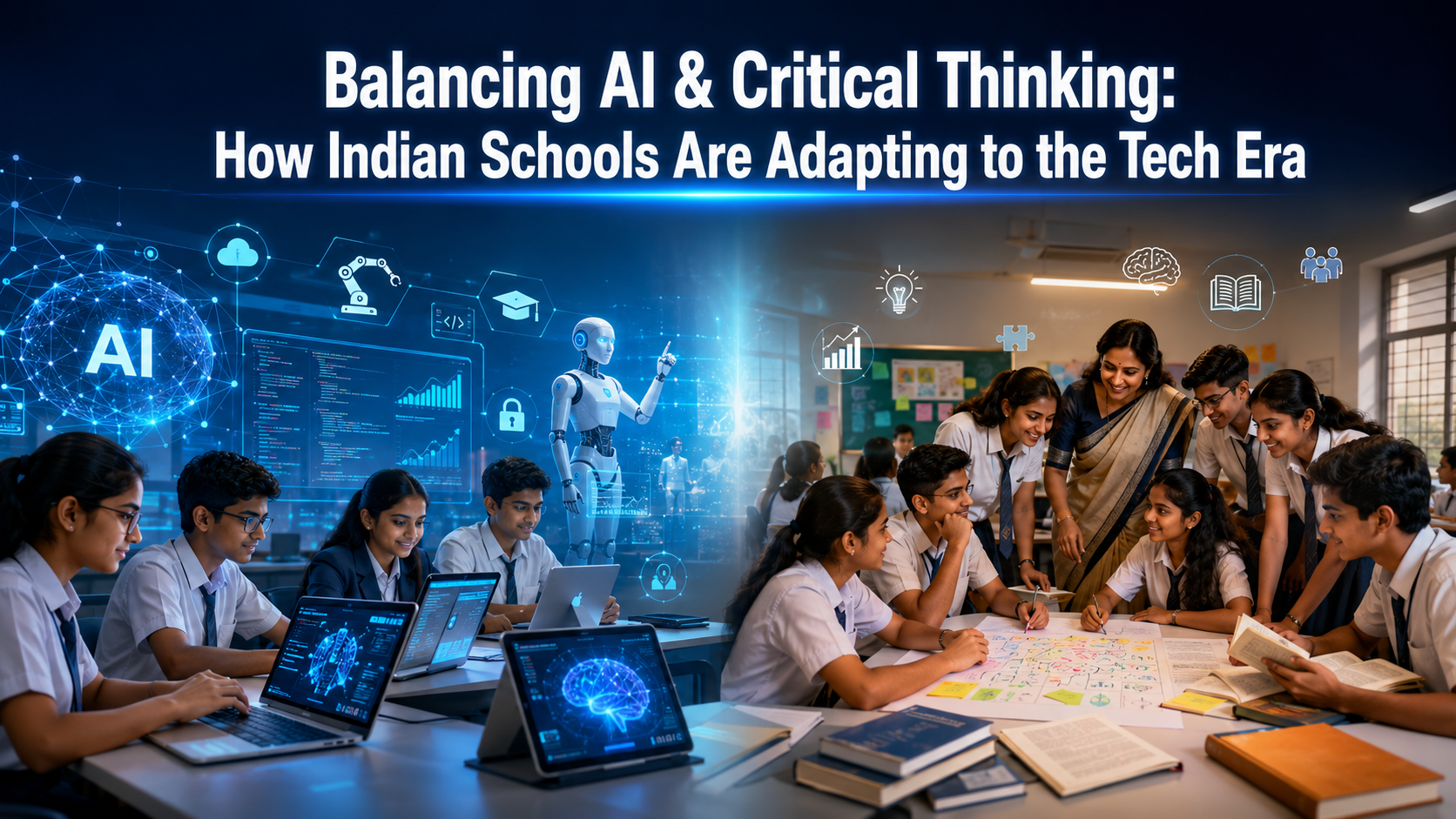
Balancing AI & Critical Thinking: How Indian Schools Are Adapting to the Tech Era
Discover how Indian schools are integrating Artificial Intelligence while strengthening critical thinking skills. Explore benefits, challenges, NEP 2020 initiatives, and the future of AI-powered education.
Balancing AI & Critical Thinking:
Artificial Intelligence (AI) is transforming classrooms across India. From AI-powered learning platforms to virtual tutors and personalized study plans, technology is changing how students learn. However, while AI makes education more accessible and efficient, educators face a crucial challenge: ensuring that students continue to develop critical thinking, creativity, and independent problem-solving skills.Indian schools are increasingly recognizing that AI should not replace human intelligence but rather enhance it. As the country embraces digital education under the National Education Policy (NEP) 2020, schools are working to strike a balance between technology-driven learning and traditional cognitive development.
Why AI Is Transforming Indian Education
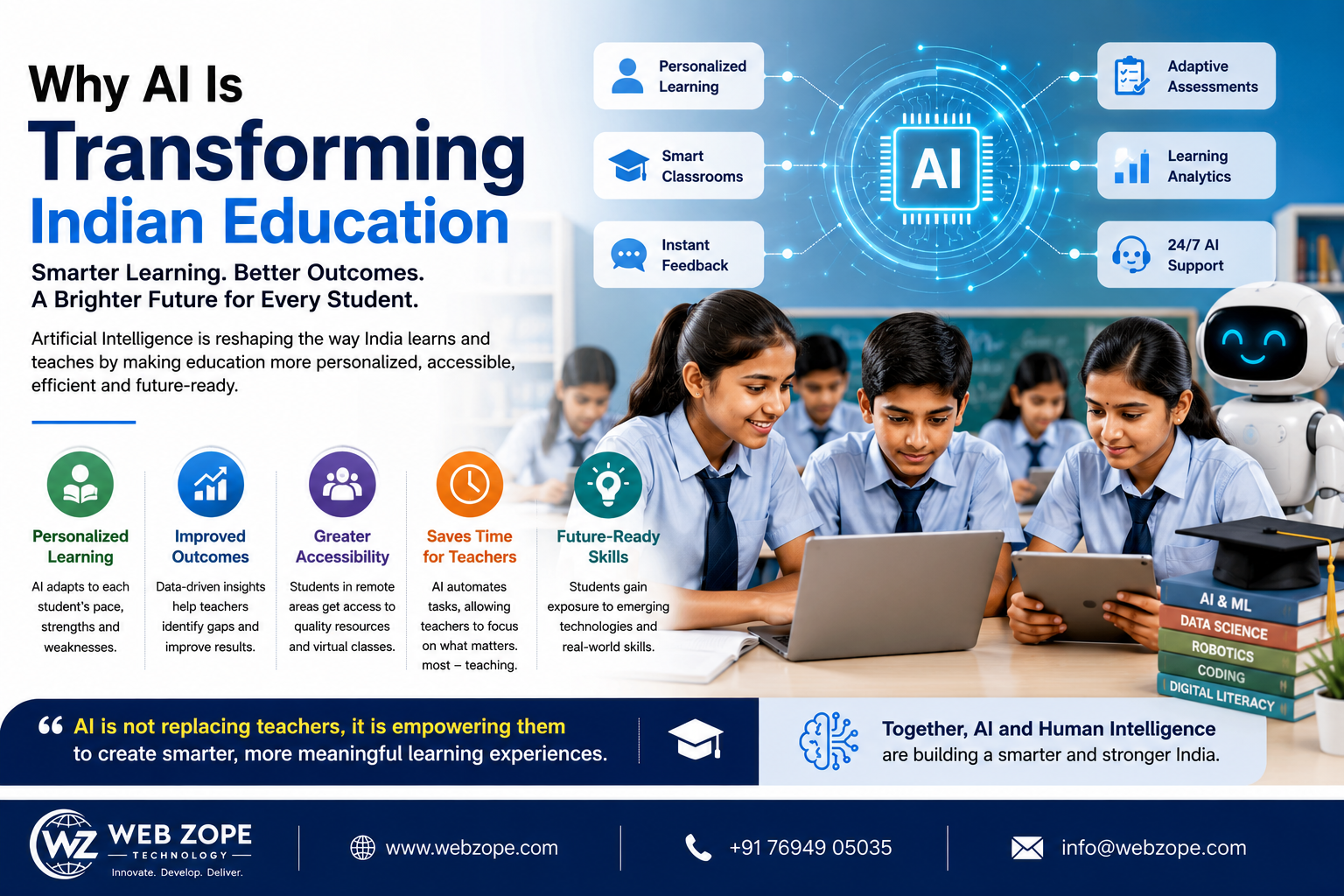
India has witnessed rapid digital transformation in education over the past few years. Smart classrooms, online assessments, AI-based learning applications, and adaptive educational software have become common in both urban and rural schools.
AI offers several advantages:
Personalized learning experiences
Instant feedback on assignments
Automated grading 24/7 learning assistance
Language translation tools
Accessibility for students with disabilities
Better learning analytics
These innovations help teachers understand student performance more effectively while allowing learners to study at their own pace.
The Growing Importance of Critical Thinking
While AI can answer questions within seconds, it cannot replace human judgment, ethical reasoning, emotional intelligence, or creativity.
Critical thinking enables students to:
Analyze information objectively
Evaluate multiple viewpoints
Solve complex real-life problems
Make informed decisions
Develop innovative ideas
Detect misinformation and fake news
Analyze information objectively Evaluate multiple viewpoints Solve complex real-life problems Make informed decisions Develop innovative ideas Detect misinformation and fake news
How Indian Schools Are Finding the Right Balance
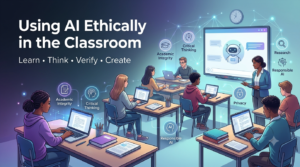
Many schools across India are adopting a blended approach where AI serves as a learning assistant rather than a replacement for teachers.
Smart Classrooms
Interactive whiteboards, digital simulations, and AI-supported educational software make learning more engaging while teachers continue to facilitate classroom discussions.
Project-Based Learning
Students are encouraged to solve real-world challenges instead of memorizing textbook answers. Group projects promote collaboration, communication, and analytical thinking.
AI-Assisted Learning
Teachers use AI platforms to identify learning gaps, recommend personalized study materials, and monitor student progress without reducing classroom interaction.
Classroom Discussions
Debates, presentations, and brainstorming sessions encourage students to express opinions, defend arguments, and think independently.
The Role of Teachers in the AI Era
Teachers remain the foundation of quality education.
Instead of replacing educators AI is reducing administrative workload, allowing teachers to spend more time mentoring students, providing emotional support, and encouraging innovation.
Teachers now focus more on:
Critical reasoning
Ethical decision-making
Leadership development
Creativity Communication skills
Problem-solving activities
This shift is helping create future-ready learners.
National Education Policy (NEP) 2020 and AI
The National Education Policy (NEP) 2020 promotes experiential learning, digital literacy, coding education, and multidisciplinary learning.
Schools are gradually introducing:
Coding from an early age
Robotics clubs
AI awareness programs
Skill-based education
Digital literacy initiatives
The objective is to prepare students for emerging careers while maintaining strong foundational knowledge.
Benefits of AI in Indian Schools
Personalized Learning
Every student learns differently. AI adapts lessons according to individual strengths and weaknesses
Better Assessment
Teachers receive instant insights into student performance through data-driven analytics.
Improved Accessibility
Students from remote areas can access quality educational resources online.
Enhanced Productivity
Administrative tasks like attendance, grading, and report generation become more efficient.
Career Readiness
Students become familiar with technologies shaping industries such as healthcare, finance, manufacturing, and software development.
Challenges Schools Must Address
Despite its advantages, AI also presents several concerns.
Overdependence on Technology
Students may rely excessively on AI tools without understanding underlying concepts.
Reduced Creativity
Constant access to ready-made answers can discourage independent thinking.
Digital Divide
Not every student has equal access to devices or high-speed internet.
Privacy Concerns
Schools must ensure that student data remains secure and is used responsibly.
Teacher Training
Educators require continuous professional development to effectively integrate AI into teaching.
Practical Strategies for Schools
Schools can successfully balance AI and critical thinking by:
Encouraging inquiry-based learning
Limiting excessive screen time
Promoting reading habits
Organizing debates and discussions
Introducing design thinking activities
Teaching ethical AI usage Conducting collaborative projects
Using AI as a support tool instead of the primary learning source
Future Careers Students Should Prepare For
As AI becomes more widespread, demand for future-ready skills continues to grow.
Students should focus on careers such as:
Artificial Intelligence
Data Science
Cybersecurity Robotics
Digital Marketing
Cloud Computing
Software Engineering
Healthcare Technology
Environmental Technology
Educational Technology (EdTech)
However, employers increasingly value human skills such as communication, leadership, creativity, and adaptability alongside technical expertise.
Tips for Parents
Parents play a vital role in helping children use technology wisely.
Some effective practices include:
Encourage curiosity and questioning.
Monitor screen time.
Promote reading beyond textbooks.
Discuss current affairs regularly.
Allow children to solve problems independently.
Introduce educational AI tools responsibly.
Support extracurricular activities that develop creativity.
Conclusion
Artificial Intelligence is undoubtedly reshaping Indian education, but technology alone cannot create successful learners. Critical thinking, creativity, empathy, and ethical reasoning remain essential for navigating an increasingly complex world.The future of education lies in combining AI-powered innovation with human intelligence. By embracing technology while preserving analytical thinking and creativity, Indian schools can prepare students not only for future careers but also for responsible citizenship in the digital age.Education is no longer about choosing between AI and human intelligence—it is about ensuring they work together to build smarter, more thoughtful, and future-ready learners.